For decades, anyone driving near the Indiana Dunes along Highway 20 would pass beneath the great elm tree that stood along Route 20 in the tiny town of Furnessville, Indiana - its limbs at one point stretching across three lanes of road. I read it made its way to the Guinness Book of World Records for this, but I haven't verified. It was one of those quiet landmarks you didn’t plan to notice but always did — a living sign that you were almost home or near your destination, a mental bookmark.
In the 1980s, when this elm was over 100 years old, there was talk of removing the tree. The railroad had been spraying chemicals to kill vegetation along the tracks. But this was a beloved tree! So the community rallied to save it, the charge being led by Ralph Ayres, a local political science teacher at Chesterton High School (a nearby town) and State Representative. Their efforts involved tying ribbons around the tree, phone calls and media outreach.
They succeeded. The tree was saved. And yet, over time, the tree’s health began to fail. Utility crews trimmed its branches again and again, and the roadwork that skirted its roots took a steady toll.
In 2011, journalist Heather Augustyn wrote an article about the giant elm in the NWI Times, in which we learned it was a Siberian elm (which are now considered invasive! I have a whole pasture of Siberian elms that actually look nothing like this one!) Heather wrote:
Conservationist and environmental activist Charlotte Read, who also remembers the efforts to save the Porter County elm, said all trees are worth saving.
"It was a big victory, although it would've been a more critical victory if it had been an American elm since they're all dying. But a tree is a tree, and it's still there today," Read said.
But by Fall 2025, the tree was gone. Some knew right away... but for a while, not everyone realized it. Some thought the tree was still there or thought a nearby tree was the same one, just changed by the season a bit. With social media, word spread. Some were dismayed to learn it was gone, while others immediately recognized that their favorite tree was missing. A few posted on social media how they had collected remaining bark fragments from the roadside.
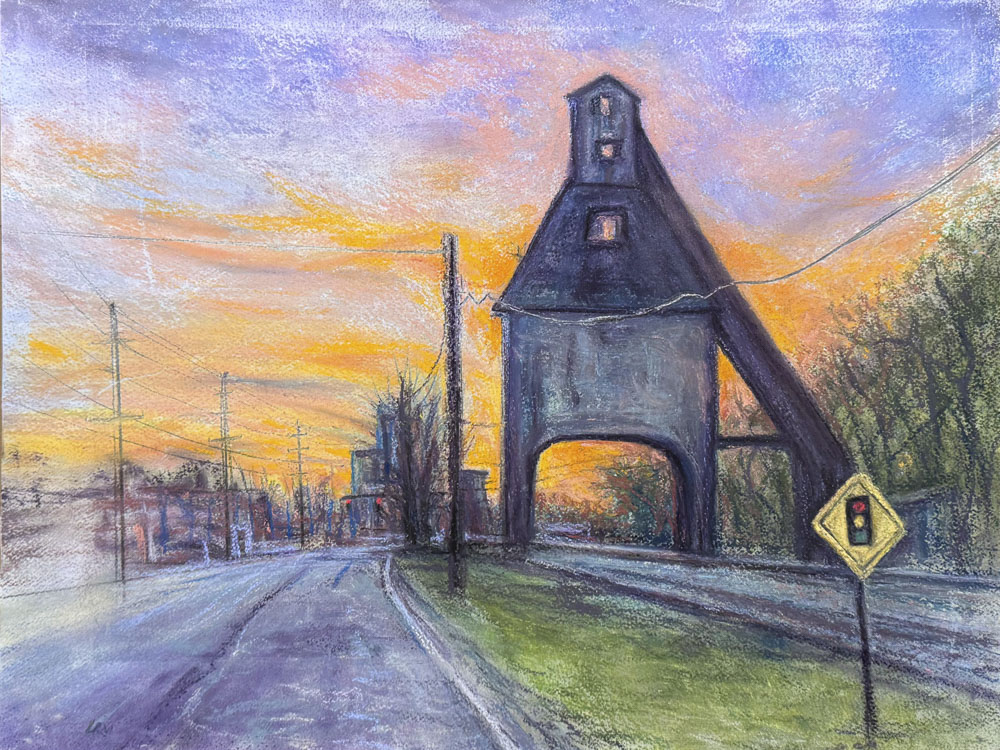
Around that same time, I had just begun offering prints of The Last Light of the Coaling Tower, a pastel celebrating another local landmark in nearby Michigan City. As people connected with that piece and shared their own reflections of the Coaling Tower, I realized how much these places mean to the community. When I learned that the elm along Route 20 had finally been taken down, I knew it was time to paint it.
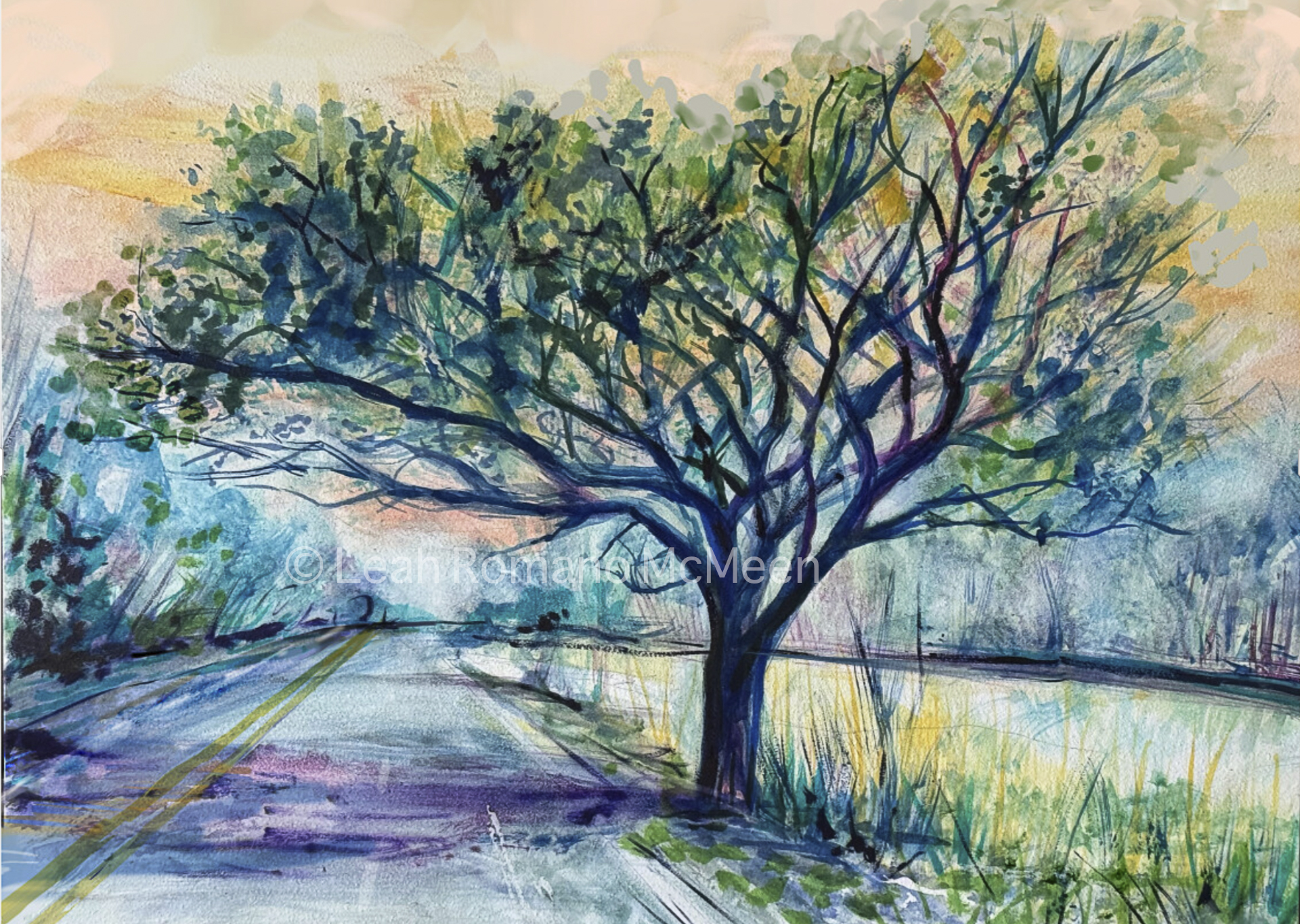
I painted The Tree on Route 20 in watercolor on clay-coated Aquabord, building up transparent washes and textured dry-brush details. I then reimagined the image as a vintage-style South Shore Line poster — a nod both to the elm’s strength and to the regional travel art that has long celebrated life along Lake Michigan.
I haven't focused on selling art prints to until this year. This particular work has done well with people in my community who were happy to have a poster to remember the tree. One person told me they spread their grandmother's ashes at this tree. Several had names for the tree in their own family like "Dad's Tree", "The Wishing Tree", etc. So touching!
It has been gratifying to create a work which resonates with my community. Collectors across Northwest Indiana, throughout the U.S., and even as far as Spain have connected with it — proof that a simple roadside tree can mean so much to several generations within a community. Most places we love probably don't become immortalized in artwork after they disappear. But this is a small way to keep them with us a little longer.
View the Tree On Route 20 poster in the shop